 | ||
 | | |
 | ||
| | |
 | ||
| | |
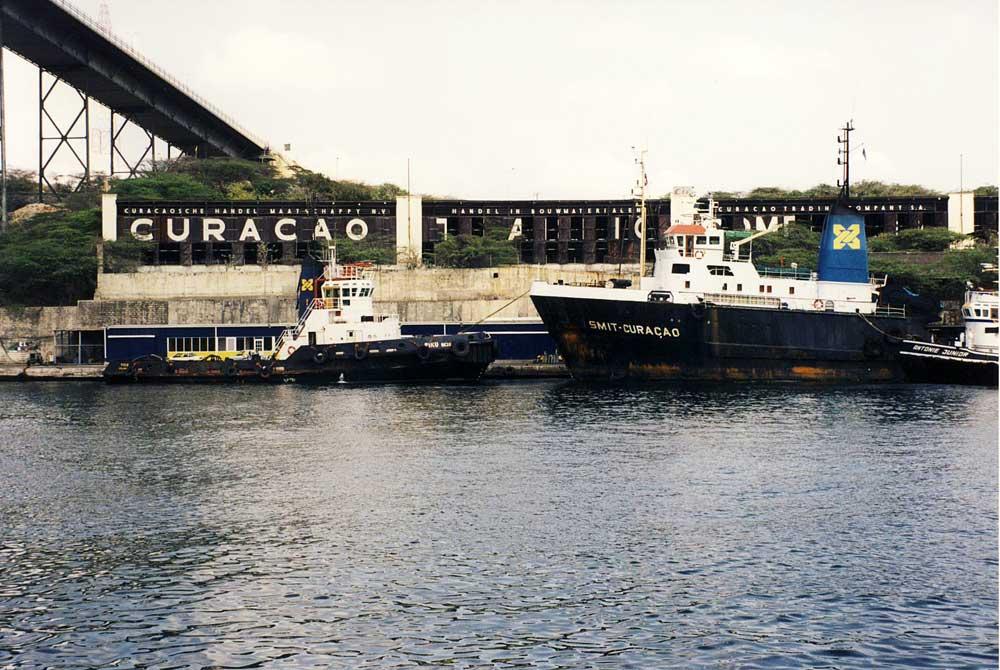
No question where we were. | ||
| | |
 | ||
| | |
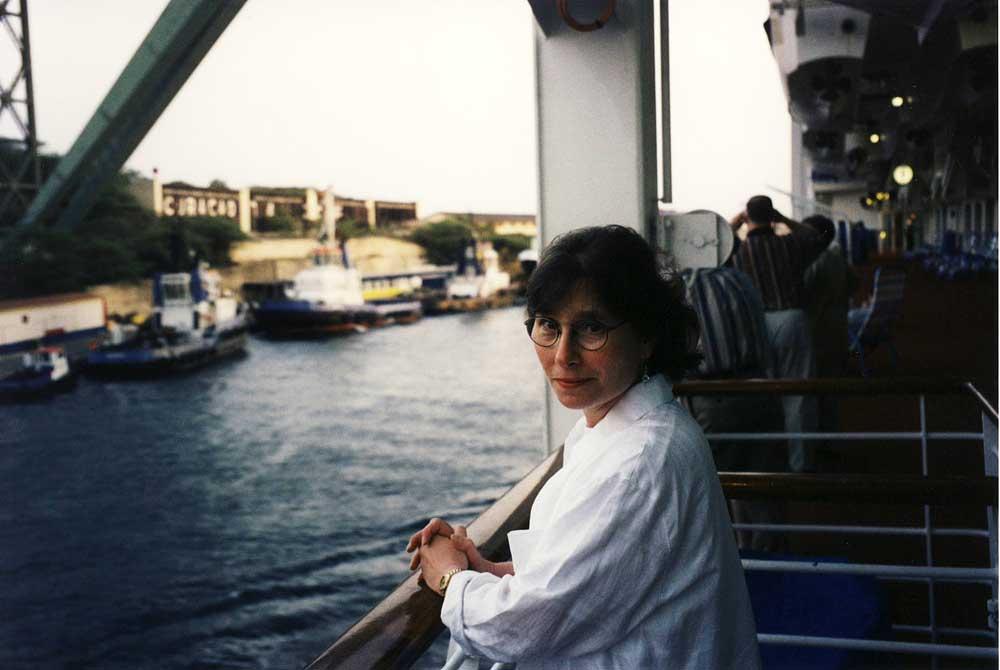
Leaving Curacao in the evening, our ship sailed past the downtown area. Calypso music was playing and people were waving. It was without a doubt our most dramatic departure. | ||
| | |
Aruba After backtracking west a few nautical miles, we found ourselves the next morning docked at Aruba, a former Netherlands Antilles island. Our tour on Aruba took us through the hotel row on the western shore of the island. It was immediately obvious that although Aruba is also arid and fairly plain, its hotel area is much more lush than anything we saw on Curacao. But along with the hotels came Dunkin' Donuts, Pizza Hut, and such. Our excursion at Aruba was an underwater one. We took a trip out to a glass bottom boat and toured a reef to see a sunken German freighter. The freighter was scuttled by the German sailors in 1940. The view, through the gorgeous clear waters of the Caribbean, was astonishing. Surrounding the rather large vessel lying on the floor of the sea, are thousands of beautiful tropical fish and large areas of coral. Since it was Sunday morning, the shopping at Oranjestad, Aruba was fairly limited. Many stores were closed and the few that were open closed at either 1 or 2 p.m., making it difficult to spend much time perusing the goods for sale. And so it was back to the ship for the afternoon. On To St. Thomas Monday, March 30 was spent sailing from Aruba to St. Thomas in the Virgin Islands. And on Tuesday, March 31, we arrived in St. Thomas, an island we had been on before only as a landing site on the way to St. Croix, a few years back. Carole, Joann, and I decided to walk from the ship into the town of Charlotte Amalie, about a 10 minute walk. We walked along the shore line, looking out at the incredibly light blue bay. There were seaplanes, sailboats everywhere, and a spectacular view of a line of cruise ships at the pier behind us. | ||
| | |
 | ||
| | |
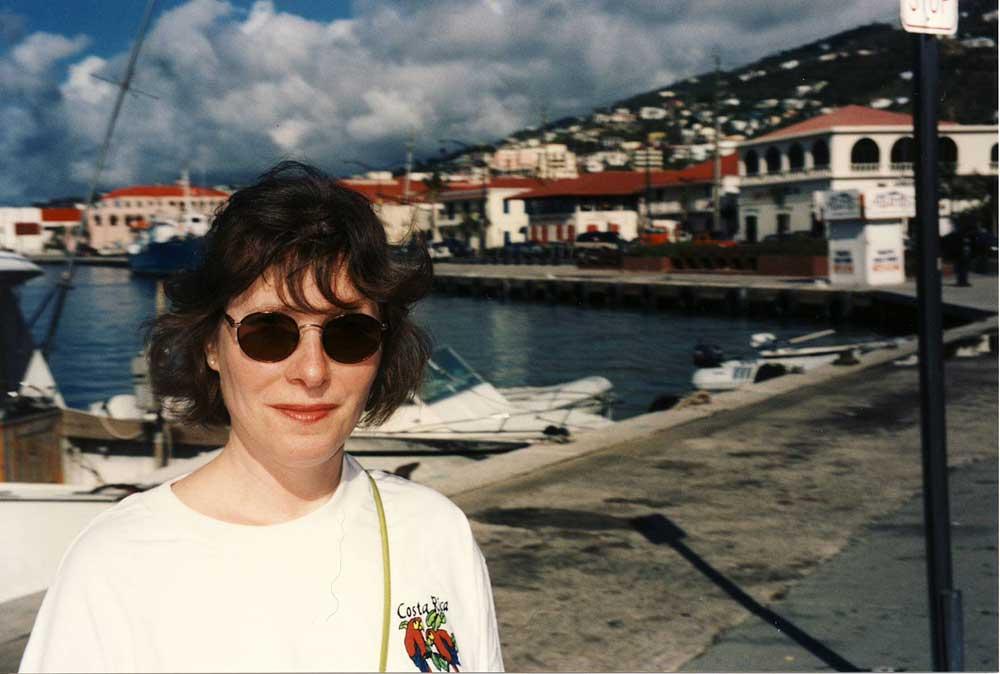
Charlotte Amalie, St. Thomas, VI, looked almost like a Greek island from the vantage point of the cruise ship. On the ship we heard lots of talk of "duty-free shopping." Charlotte Amalie is a mecca of duty-free shopping. | ||
| | |
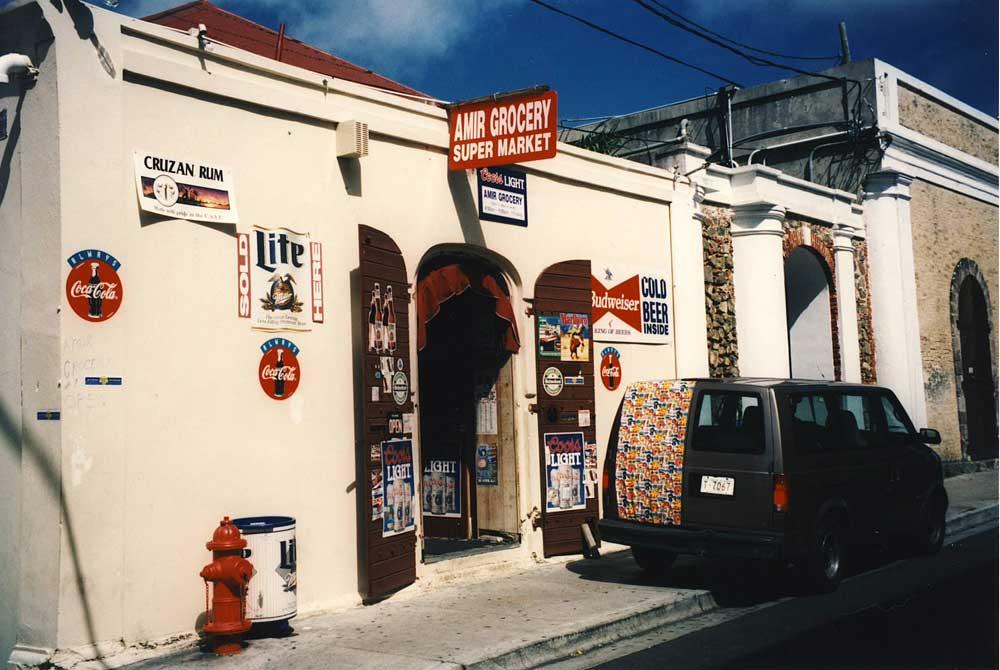
Throughout the entire journey to St. Thomas we had been told repeatedly about the shops there, and the opportunities for buying jewels (emeralds, diamonds, black coral), watches, and other luxurious wares. While we were not interested in doing much buying, we looked. Charlotte Amalie is located at the base of hills lined with beautiful homes and buildings, a site that makes the area look almost like a Greek island. Quite lovely. But the town itself consists of two primary streets lined with shops and an open air market. So, what did we do? We shopped. | ||
| | |
 | ||
| | |
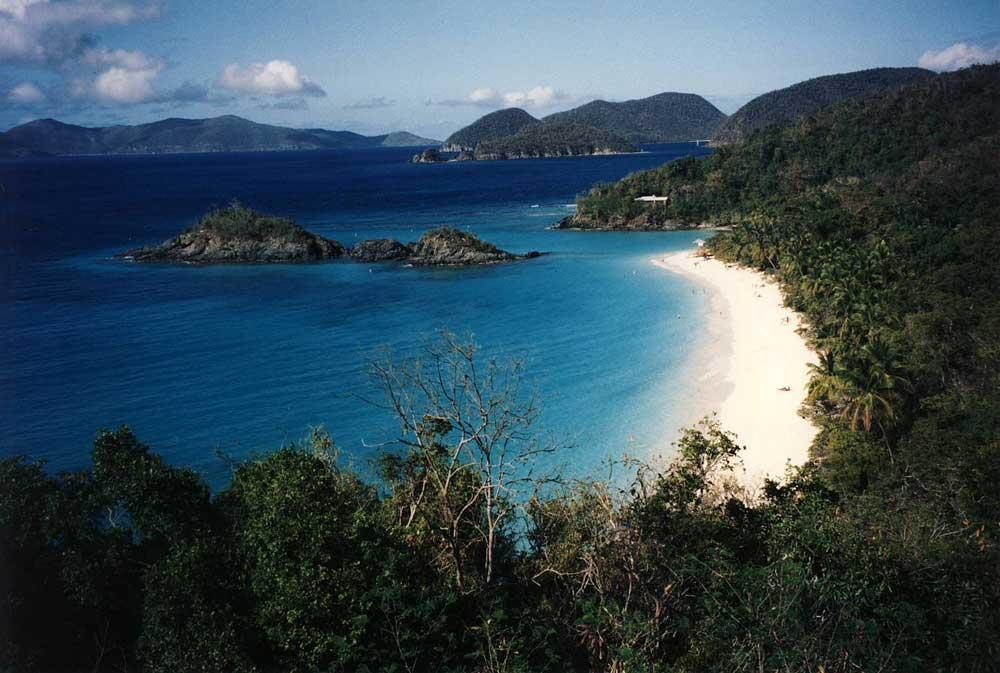
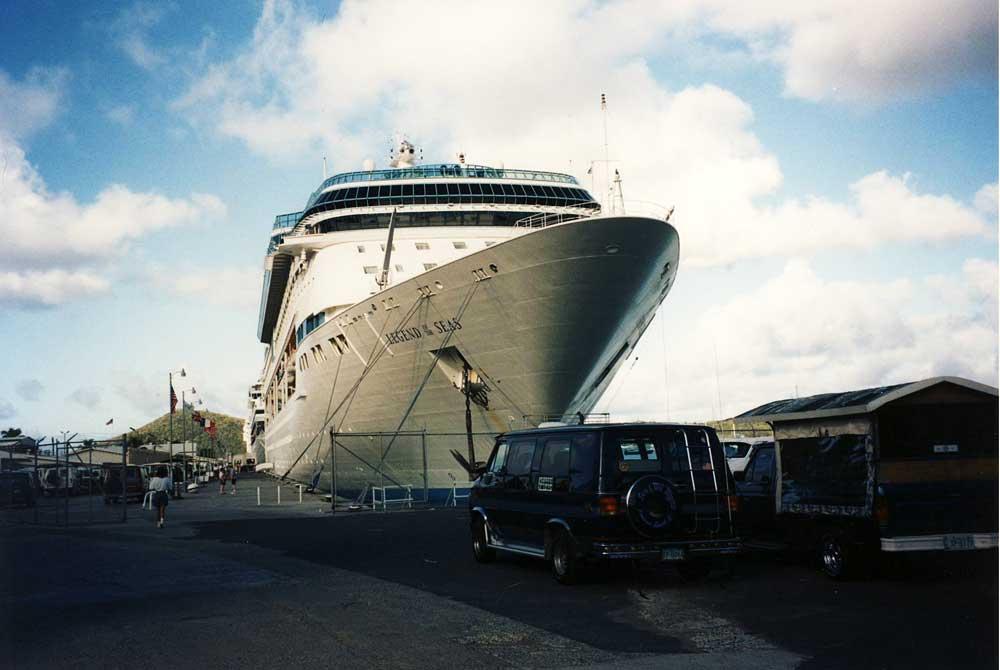
And what did we find when we returned to the ship later that morning? More shops selling more of the same merchandise. But we still had one more adventure ahead. A trip to the island of St. John. Knowing that all passengers were to be aboard the ship by 5:30, and that the ship was scheduled to leave St. Thomas at 6:00, I was a little surprised that our tour began at 1:15 and was scheduled to take four hours. It certainly seemed to be cutting it a little close, but I was repeatedly assured that the ship would not sail until the tour returned. After a strange journey from the ship's theater where the tour patrons congregated, we had to walk down a very long dock past another cruise ship to the ferry which was to take us to St. John, about a half hour away. At long last we arrived at St. John and many of us looked aghast at the jitneys which were to be our transportation around the island for the next two hours. If you've never been on St. John, believe me when I tell you that it is a mountainous island with narrow roads. The jitneys barely fit in a lane. All driving in the US Virgin Islands, by the way, is on the left. The jitney is essentially a pickup truck with a passenger area stuck on the back. It is not a comfortable ride, and clearly not comfortable for elderly people or those, like me, with a back problem. There had been no warning. But we survived, despite a close call with another jitney from our group. The tour guide, who sounded rather bored and jaded, drove us up and down hills and around curves, blaring his horn at each steep curve, until at long last we got to see the astoundingly beautiful beaches and waters of St. John. These were clearly among the most gorgeous white sand/Caribbean blue water beaches I'd ever seen. Among the sites is Caneel Bay, the resort built by the Rockefellers which contains little in the way of amenities. Those who stay there depend on a ferry to take them to and from St. Thomas. Finally, we arrived back at the dock and boarded our ferry to return to St. Thomas. When all the jitneys had returned and we started back to our ship, it was already 5:00. We pulled up alongside the ship at 5:40, the Assistant Cruise Director waiting for us, and we boarded the ship for our last evening at sea. | ||
| | |
 | ||
| | |
St. John has some of the most beautiful beaches and water in the world. If you wanted to make a living taking postcard photos, this might be the place! | ||
| | |
Aboard The Ship Royal Caribbean did a first class job board the ship. The crew was very pleasant and everything was done well. The service in the dining room was astonishing. Anyone who has been on a cruise knows that one sits with the same people at virtually every meal and is served by the same waiter and assistant waiter. We were lucky to have a waiter from Rumania who was pleasant, helpful, and charming, and an assistant waiter from Turkey who was, if anything, a delight. This young fellow came to be known as "mumbles" from his manner of speech, but he was someone with a sparkle in his eyes and an excellent sense of humor. Aside from Mike and Joann, we ate nightly with two couples from Albuquerque. The entertainment was a constant source of interest. Each night the ship presented a show in the large theater which was at the forward end of the ship. The talent ranged from the sublime to the ridiculous. One act consisted of a couple with their two children, who did primarily a humorous unicycle act. Strangely, the father was so stupidly funny that I haven't laughed so hard in years. But I had visions of watching a week of Ed Sullivan-type entertainment. Some of the singers looked like they were experiencing a downhill slide and were destined to spend the rest of their careers on cruise ships. The entertainment ranged from singers and dancers, to magicians. Another source of humor was the ever-present ship's photographers who would take photos of the passengers at almost any excuse. It's amazing to think that they could take and produce so many thousands of photos and still make a profit from the sale of what had to be a small minority of the photos, but undoubtedly they did. Some of the shots were nice, others were silly (example: a young woman in a pirate suit and mustache and beard comes around and stands behind you at dinner with a plastic sword at your throat). San Juan and home On the morning of April 1 we docked at San Juan for our journey home, at long last after 11 days at sea. Carole and I had an early flight out and soon found ourselves on the way to the airport, traveling through San Juan. Our flight left on time and arrived in New York on time, but we were faced with rainy rush-hour traffic back to Connecticut. What should have been a one hour trip turned into a two hour trip, but at long last we were home, ready to unpack, take care of the mail and bills, and get the film processed. | ||
| | |
 | ||
| | |
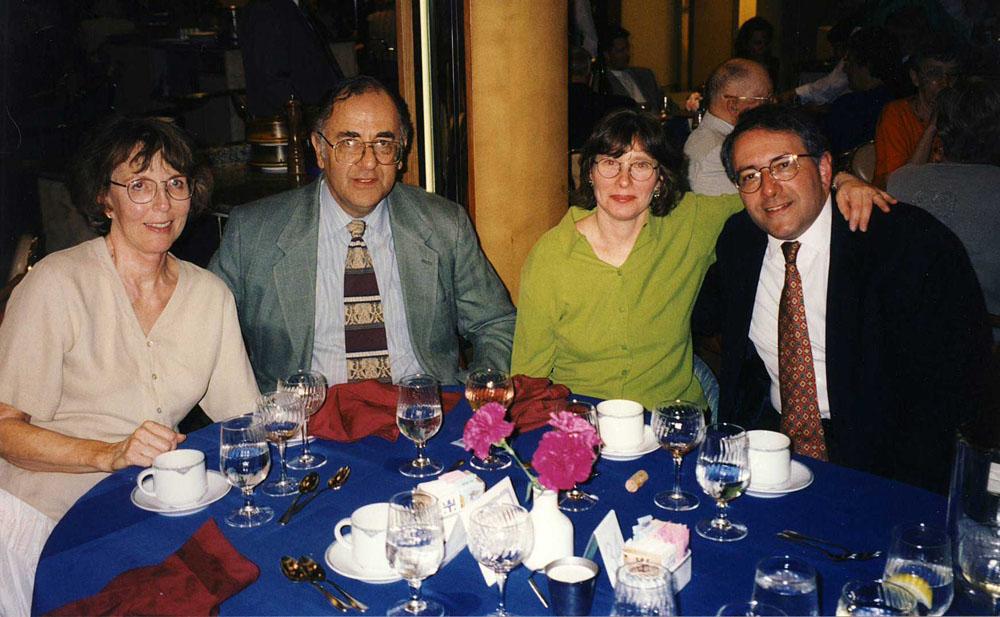
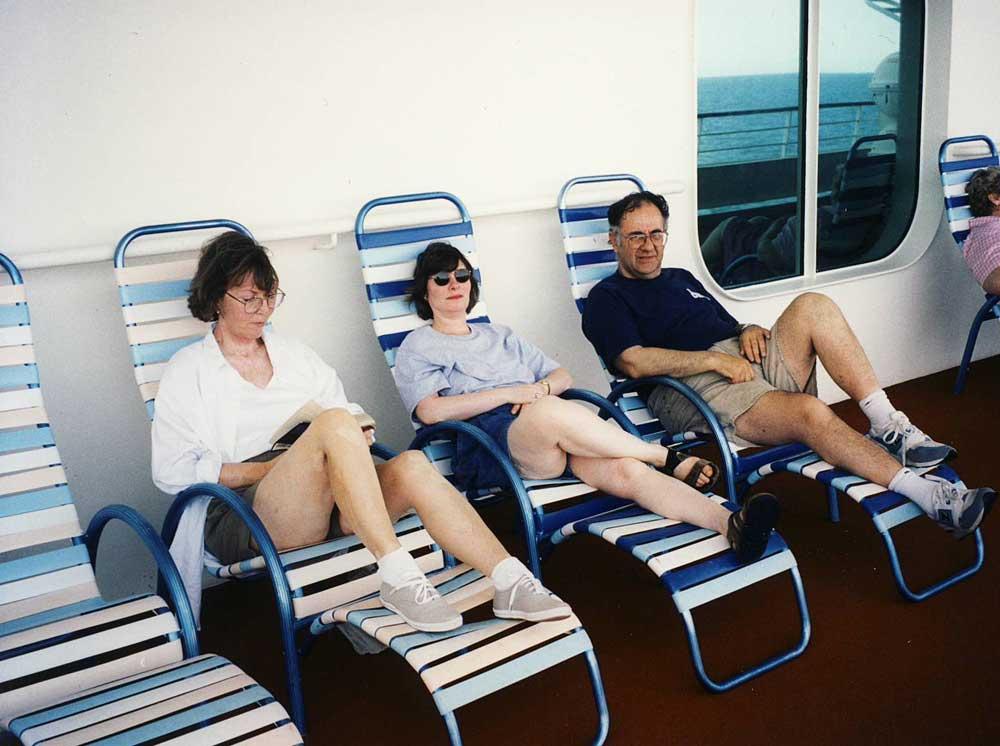
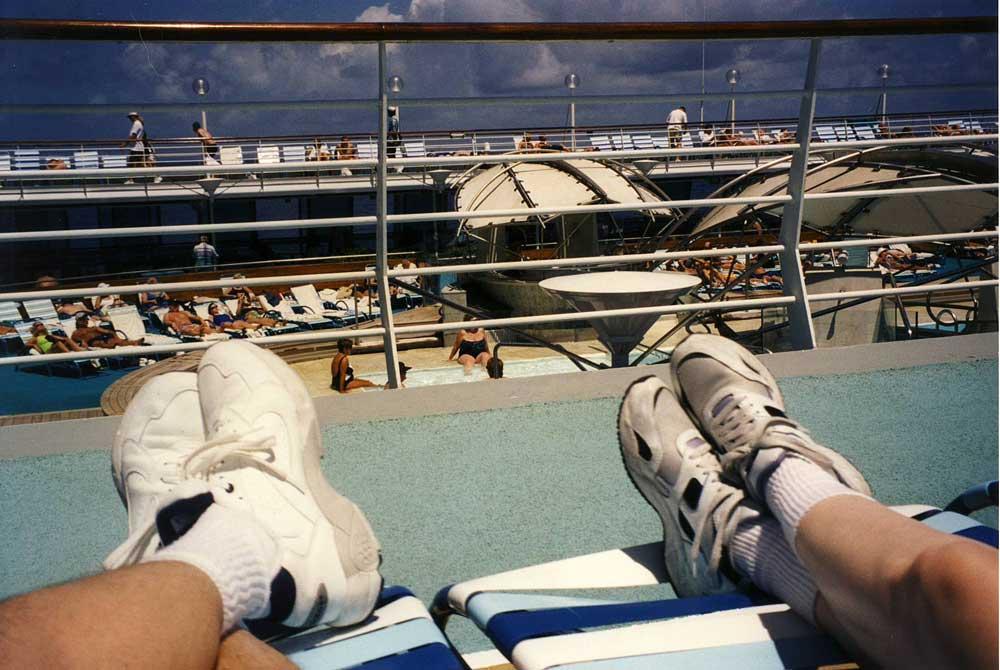
When I go on vacation, I don't really want to have to take a jacket and tie. That was the dress for formal dinners aboard ship, at least in those days. The photo below shows a far more preferable dress style for a cruise. In the photo above, from left to right, Joann Griffin, my brother Mike, my wife, Carole, and me. | ||
| | |
 | ||
| | |
 | ||
| | |
 | ||
| | |
The End. | ||
| | |
 | |||||
To return to page 1 of the Panama photos, click on the dancers | |||||
| | | | | |